Last updated September 24, 2026
New windows and doors improve comfort, cut energy bills and add long-term value to your home. Sightline Windows & Doors Pompano Beach pairs proven product lines with our own installing crews for lasting performance - and a price we put in writing.
1. Choose your installer
The unit is half the job - the install is the other half. Our own background-checked crews measure, set, seal and insulate every opening, and they know the lines we quote inside and out because they install them every week.
2. Select the right products
Compare styles, materials and glass packages side by side until the fit is right for your rooms, your budget and your goals. The product-line comparison below is the place to start.
3. Prepare your home for install
Before install day we walk you through a short checklist - furniture pulled back, treatments down, a clear path to each opening - so install day is watch-it-happen, not scramble.
Compare the Lines We Quote
Every project is priced on the same lines, side by side - the price indicators below are relative, and your consultant shows exact numbers on your actual openings.
PGTThe line Florida homeowners arrive naming - the most Miami-Dade certifications in the industry$$$
- More Miami-Dade NOA certifications than any other line we quote
- WinGuard, EnergyVue and ClassicVue Max systems built for every wind zone
- 99% on-time delivery keeps your install date on the calendar
CGIThe heavyweight impact line$$$$$
- Large-missile impact ratings for the strictest wind zones
- Architectural-grade aluminum with commercial-depth frames
- The line we quote when protection is the whole point
CWSThe Florida value pick$$
- Vinyl systems built in Florida for Florida codes
- Strong energy packages at the friendliest price point
- The smart start for whole-home replacements on a budget
ESWSlim lines, big glass$$$$
- Narrow-sightline aluminum for modern elevations
- Oversized openings and floor-to-ceiling glass
- Impact-rated without the bunker look
ECOThe aluminum impact workhorse$$$
- Miami-built aluminum impact systems
- A strong price-to-protection ratio for coastal homes
- Proven inventory lines with short lead times
Seasonal Windows & Doors Care for Pompano Beach: Year-Round Homeowner’s Guide
Pompano Beach does not have four seasons. It has two: a dry season that pulls moisture from every seal and deposits salt on every frame, and a wet season that tests every weep hole and corrodes every unprotected hinge. Apply a silicone-based frame lubricant in June, and you’ll trap moisture against the gasket and accelerate the exact seal failure you’re trying to prevent. The correct product formulation changes between seasons. In this guide and our Window Installation Maintenance Checklist for Pompano Beach Homeowners, we’ll map the maintenance tasks to each cycle, identify the specific products safe for coated aluminum in a marine environment, and show you how to document everything in a two-page log that satisfies manufacturer warranty requirements.
Quick Answer

Homeowners in Pompano Beach should maintain windows and doors on a two-season cycle: dry season (October-May) focuses on salt removal, hardware lubrication with dry-film products, and seal inspection; wet season (June-September) focuses on weep hole verification, corrosion checks after sustained rain, and pre-storm shutter track clearing. Using the wrong product type in the wrong season causes more damage than skipping maintenance entirely.
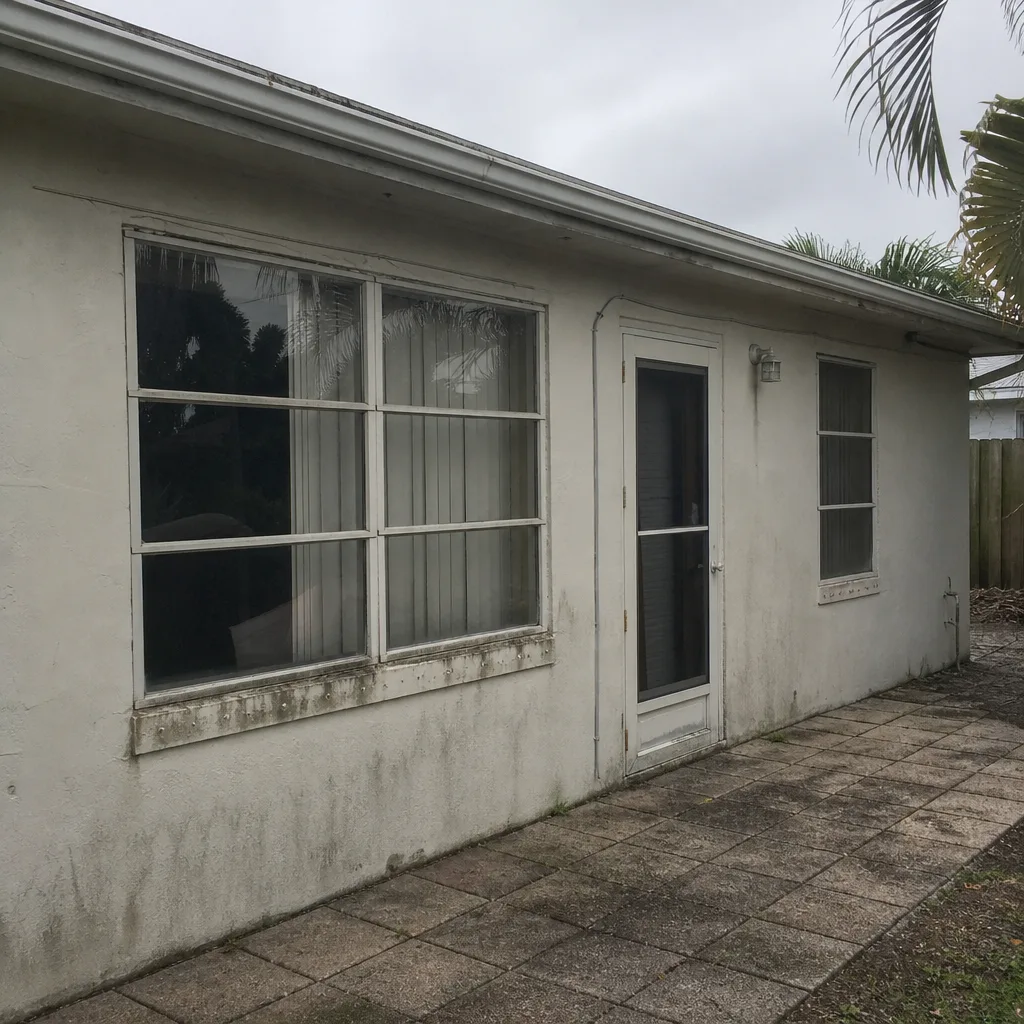 Before
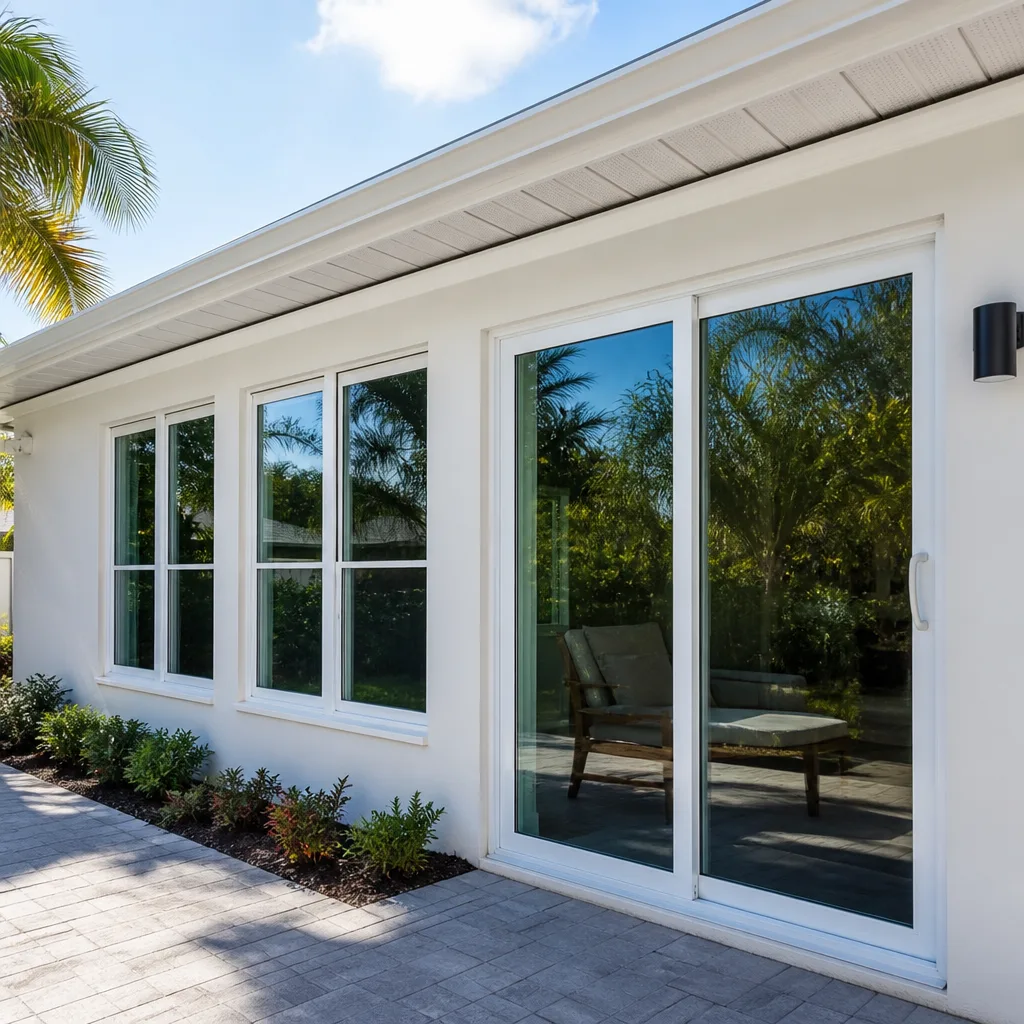 After
AfterTable of Contents
- Pompano Beach’s Two-Season Climate and What It Does to Openings
- Dry Season Maintenance: October Through May
- Wet Season Maintenance: June Through September
- Products Safe for Coated Aluminum in a Marine Environment
- How to Build a Two-Page Seasonal Log for Warranty Claims
- Three Conditions That Require Professional Re-Caulk Before Hurricane Season
- Common Mistakes to Avoid
- When to Call a Professional
- Frequently Asked Questions
Pompano Beach’s Two-Season Climate and What It Does to Openings

The standard four-season maintenance calendar fails in Pompano Beach because it assumes freeze-thaw cycles, deciduous debris, and heating-season air sealing. None of these apply. What applies is salt, solar load, and concentrated rainfall.
From October through May, the dry season brings steady easterly winds off the Atlantic that deposit chloride crystals on every exposed surface. Relative humidity drops into the 50s, which sounds comfortable but pulls residual moisture from rubber gaskets and vinyl weatherstripping, causing shrinkage and crack initiation. The sun angle in December and January is lower than most homeowners expect, striking east- and south-facing glass directly during morning hours and accelerating thermal stress on low-e coatings.
From June through September, the pattern inverts. Sustained relative humidity above 80% keeps frames perpetually damp. Afternoon convection storms drop 2-4 inches in hours, testing drainage paths that were clear in April but may be obstructed by June. The 2023 NOAA data for Pompano Beach showed 62.8 inches of annual rainfall, with 42 inches falling in just four months. This is not a maintenance footnote. It is the defining condition.
The conflict between seasons is real. Dry-season tasks that make sense in January, aggressive salt removal and dry-film lubrication, become counterproductive if repeated in July when frames are already saturated. Wet-season vigilance, constant weep hole monitoring and post-storm corrosion checks, is wasted effort in March when the hardware is dry and the drainage paths are empty.
We’ve measured this at Sightline Windows & Doors Pompano Beach home. In our work across neighborhoods from Harbor Village to Collier City to the Isles, the openings that fail prematurely are almost always maintained on a calendar-month schedule imported from somewhere else, not on a cycle that matches what the local atmosphere is actually doing.
Dry Season Maintenance: October Through May
Dry season maintenance has two objectives: remove accumulated salt before it etches, and restore flexibility to seals and hardware before the wet season tests them.
Salt Crystal Removal Protocol
Chloride crystals from ocean exposure bond to anodized and painted aluminum frames through a process called crevice corrosion initiation. The crystals themselves are not the problem; the problem is what happens when humidity returns and the crystals dissolve into electrolytic solution. Remove them incorrectly, and you abrade the protective coating and create the exact crevice you were trying to prevent.
- Rinse first, always. Use fresh water at moderate pressure, never a dry brush or cloth. The goal is dissolution, not mechanical removal. A garden hose with a fan nozzle, held at 45 degrees to the frame, is sufficient. Work top to bottom so dissolved salt does not migrate to lower sections you’ve already cleaned.
- Wait for evaporation, then inspect. Allow frames to air-dry completely, typically 20-30 minutes in Pompano Beach’s October conditions. Look for white streaking at miter joints and sill corners. These indicate concentrated deposits that the rinse did not fully dissolve.
- Targeted second rinse for streaks. Apply a 1:10 solution of white vinegar and water with a soft sponge, let stand 90 seconds, then rinse again. The mild acidity neutralizes chloride without attacking aluminum oxide layers. Never use muriatic acid, naval jelly, or any product containing hydrochloric acid on coated aluminum, even at dilute concentrations.
- Dry with lint-free cloth. Microfiber is acceptable; terry cloth is not, as it traps crystals in the weave and re-deposits them.
Low-E Glass Rinsing Sequence
Low-emissivity coatings on the interior surface of glass (surface #3 in a dual-pane IGU) are durable but not indestructible. The correct rinsing sequence for Pompano Beach’s dry-season dust and salt film:
- Rinse glass with fresh water first, same as frames
- Apply a solution of 1 teaspoon mild dish detergent per gallon of water with a soft sponge or lambswool applicator
- Rinse immediately; do not allow detergent to dry on the surface
- Squeegee top to bottom with a rubber blade in good condition, chipped blades scratch
- Detail edges with a clean microfiber towel
Never clean low-e glass in direct sun when the glass surface temperature exceeds 85°F. The coating can thermal-shock, and detergent residues bake on. In Pompano Beach, this means morning cleaning on east-facing elevations, afternoon on west-facing.
Hardware and Seal Restoration
With frames clean and dry, apply a dry-film lubricant to hinges, locks, and rollers. The correct formulation for this season is a PTFE-based dry lubricant (aerosol or liquid that cures to a solid film), not a silicone or petroleum product. Dry film does not attract dust, does not migrate in heat, and provides a barrier against the salt that will return with the next onshore breeze.
Inspect compression seals and bulb gaskets for cracking. The dry season is when shrinkage reveals damage that wet-season swelling concealed. Replace any gasket that has lost more than 30% of its original compression height. For PGT and CGI impact-rated units, use only manufacturer-specified replacement gaskets; third-party substitutes often fail the pressure-cycle testing that the original design passed.
Wet Season Maintenance: June Through September

Wet season maintenance shifts from restoration to drainage verification and corrosion interruption. The goal is to ensure water that enters the system exits before it reaches the interior, and to catch hardware corrosion before it seizes mechanisms.
Pre-Storm Shutter Track Inspection
Colonial, Bahama, and accordion shutter tracks share a common failure mode: debris accumulation that prevents full closure under load. In Pompano Beach, the debris is often palm flower parts, gecko droppings, and the crystalline residue from dry-season salt that re-dissolved in June’s first storms.
- Remove track covers and vacuum. Use a narrow nozzle and soft brush attachment. Compressed air is not recommended; it drives debris into roller mechanisms.
- Check track alignment with a 4-foot level. Settlement or fastener corrosion can create low points where water pools. A track that holds water holds debris.
- Lubricate with a silicone-free, corrosion-inhibiting product. In wet season, you want a product that displaces water and leaves a protective film, not one that seals moisture in. We specify a lithium-complex grease with corrosion inhibitors for Pompano Beach installations, applied sparingly to roller contact surfaces only.
- Cycle the shutter fully open and closed three times. Binding at any point indicates misalignment, corrosion, or debris the vacuum missed.
Weep Hole Flow-Rate Test
Weep holes in vinyl and aluminum window frames are the pressure-equalization path that prevents water from being forced into the interior by wind-driven rain. A weep hole that is clogged or undersized for the volume of water reaching it will fail during a tropical storm or hurricane.
The flow-rate test is simple and rarely performed. With a pitcher, pour one quart of water into the track or sill section that drains to the weep hole. The water should exit the exterior weep hole within 30 seconds. If it pools, backs up, or drains slowly, the weep hole is obstructed or the drainage path has internal blockage from sealant squeeze-out or construction debris.
In Pompano Beach, we see this most often in homes built during the 2004-2007 construction surge, where fast installation schedules left excess sealant in drainage channels. The weep hole looks open from outside but is sealed from inside. A pipe cleaner or weep-hole brush can clear surface obstruction; internal blockage requires frame disassembly or replacement.
Hardware Corrosion Check After Sustained Rain Events
After any rain event exceeding 2 inches in 24 hours, or any period of sustained relative humidity above 90% for 48 hours, inspect visible hardware for corrosion initiation. Look for:
- White or green powdery deposits on brass, bronze, or zinc-coated steel components
- Red-brown staining at stainless steel fasteners (indicates galvanic corrosion with adjacent dissimilar metal)
- Stiffness in lock mechanisms that operated smoothly in May
Address corrosion immediately with a corrosion-removing product specified for the base metal, followed by re-lubrication with the wet-season appropriate product. Do not ignore early corrosion; in Pompano Beach’s wet season, the progression from surface staining to mechanism seizure can occur in two to three weeks.
Products Safe for Coated Aluminum in a Marine Environment
The product shelf at a Pompano Beach hardware store contains dozens of lubricants, cleaners, and protectants. Most are inappropriate for coated aluminum in a marine environment. We specify by formulation type, not brand, because formulations have predictable chemical behavior and brands change.
Dry Season: Frame and Hardware Products
| Application | Formulation Type | Why It Works | What to Avoid |
|---|---|---|---|
| Frame cleaning, general | pH-neutral detergent solution | Removes salt without attacking aluminum oxide layer | Ammonia-based glass cleaners on frames; alkaline degreasers |
| Stubborn salt deposits | 1:10 white vinegar solution | Mild acidity dissolves chloride crystals | Muriatic acid, naval jelly, CLR on coated aluminum |
| Hardware lubrication | PTFE dry-film lubricant | Cures to solid, does not attract dust or salt | WD-40, silicone sprays, lithium grease in dry season |
| Seal conditioning | Silicone-based rubber conditioner | Restores flexibility to EPDM and silicone gaskets | Petroleum-based products that swell and degrade rubber |
Wet Season: Frame and Hardware Products
| Application | Formulation Type | Why It Works | What to Avoid |
|---|---|---|---|
| Hardware lubrication | Lithium-complex grease with corrosion inhibitors | Displaces water, protects against salt spray | Dry-film products that wash away; pure silicone that traps moisture |
| Corrosion removal | Oxalic acid-based rust converter (for ferrous metals only) | Converts iron oxide to stable compound | Naval jelly on non-ferrous hardware; sandpaper or wire brushes on coated surfaces |
| Post-storm frame rinse | Fresh water only | Removes wind-driven salt and debris | Pressure washers closer than 18 inches; any cleaner on hot frames |
The critical distinction: silicone spray in dry season is acceptable for gasket conditioning but dangerous for frame lubrication in wet season. The same product, two different outcomes, determined entirely by when it is applied. This is why we structure maintenance by season, not by product category.
For homeowners with new window installation in Pompano Beach, we provide a season-specific product card at completion, matched to the exact hardware and frame materials in the opening.
How to Build a Two-Page Seasonal Log for Warranty Claims
Manufacturer warranties for impact-rated windows and doors, including PGT, CGI, and CWS product lines, increasingly require documented maintenance as a condition of coverage. The warranty language typically states “reasonable and regular maintenance” without defining either term. A two-page seasonal log satisfies the documentation requirement by creating a contemporaneous record with specific measurements.
Page One: Opening Inventory and Baseline
Create a table with one row per opening. Columns:
- Opening ID (your own numbering: F1 for front first floor, F2, etc.)
- Manufacturer and model (from the permanent label on the frame or sash)
- Installation date (from your closing documents or our completion certificate)
- Frame material and finish (anodized aluminum, painted aluminum, vinyl, etc.)
- Glass specification (impact-rated, low-e type, argon fill yes/no)
- Hardware type (lock brand, hinge type, roller specification if applicable)
- Baseline photo date and file name
Attach baseline photos: one exterior, one interior, one detail of the manufacturer label. Store digitally with date stamps; print a contact sheet for physical backup.
Page Two: Seasonal Maintenance Record
For each maintenance event, record:
- Date and season designation. “October 15, 2024 - Dry Season Start”
- Tasks performed. Specific, not general: “Salt rinse per protocol; weep hole flow test 1 quart/18 seconds; dry-film lubricant applied to lock and hinge; gasket inspection, no cracks noted”
- Products used. Formulation type and date of purchase: “PTFE dry-film lubricant, purchased 10/12/2024”
- Measurements taken. This is where the log becomes warranty-grade documentation. Record weep hole flow times, moisture meter readings at frame corners, any dimensional changes in gasket compression
- Conditions observed. “Salt accumulation moderate on east elevation, heavy on south; no corrosion on hardware; screen frame corner gap at F3, 3mm, noted for monitoring”
- Photos taken. File names and brief descriptions
- Next scheduled maintenance. Date and anticipated tasks
The log does not need to be elaborate. It needs to be consistent, dated, and specific. In a warranty dispute, a homeowner with 18 months of logged maintenance has a documented practice of care; a homeowner with a verbal claim of “I maintained them” does not.
At Sightline Windows & Doors Pompano Beach, we provide a template log at completion of every replacement project, pre-populated with the opening inventory from our measured survey.
Three Conditions That Require Professional Re-Caulk Before Hurricane Season
Perimeter sealant between window frames and wall substrate is the pressure barrier that prevents wind-driven rain from entering the wall cavity. In Pompano Beach, sealant ages faster than inland locations due to UV exposure, thermal cycling, and salt spray. Three conditions indicate that DIY maintenance is insufficient and professional re-caulk is needed before June 1; see our Windows & Doors Cost Breakdown: The Pompano Beach Homeowner’s Reference for 2026 for typical pricing.
Condition 1: Moisture Meter Reading Above 18% at Frame Perimeter
Purchase a pin-type moisture meter for approximately $12. Probe the drywall or sheathing adjacent to the frame perimeter, not the frame itself. Readings above 18% indicate active moisture intrusion through failed sealant. Readings above 25% indicate conditions favorable for mold growth. The meter provides objective documentation; visual inspection alone misses early-stage failure.
Test at four points per opening: top left, top right, bottom left, bottom right. Record all readings in your seasonal log. A reading that increases between dry season and wet season tests confirms active leakage, not residual construction moisture.
Condition 2: Visible Sealant Separation Exceeding 1/8 Inch
Sealant must maintain continuous adhesion to both the frame and the substrate. Separation, also called adhesive failure, creates a direct path for water. Measure separation with a feeler gauge or ruler. Any gap exceeding 1/8 inch at any point, or any continuous separation longer than 2 inches, requires removal and replacement of the sealant bead. Caulking over failed sealant traps water and accelerates substrate decay.
Condition 3: Cohesive Failure or Crumbling
Cohesive failure occurs when the sealant splits internally, leaving material on both surfaces but creating a crack through the bead. This is common in polyurethane sealants after 5-7 years of Pompano Beach exposure. Test by pressing a blunt tool (a popsicle stick works) into the sealant surface. If the material crumbles, cracks, or displaces as powder, it has lost elastomeric properties and will not accommodate frame movement during a pressure event.
Professional re-caulk for impact-rated openings involves specific sealant products tested for adhesion to the frame material and for cyclic joint movement. The product must also be compatible with any existing sealant residue. This is not a generic hardware-store caulk application. For door installation in Pompano Beach and window replacement projects, we specify and apply sealant matched to the frame material and the wall substrate type.
Common Mistakes to Avoid

- Applying silicone lubricant in wet season. Silicone spray on frame hardware during June through September traps moisture against metal surfaces and accelerates corrosion. The correct wet-season product is a lithium-complex grease with corrosion inhibitors.
- Pressure-washing frames and glass. Pressure washers closer than 18 inches, or using a 0-degree nozzle at any distance, can deform weep hole flaps, force water into drainage channels backwards, and etch low-e coatings. Use a garden hose with fan nozzle only.
- Cleaning low-e glass in direct sun. In Pompano Beach, glass surface temperatures on south and west elevations regularly exceed 100°F by 10 AM. Cleaning in these conditions causes thermal shock and bakes detergents onto the coating. Clean east elevations before 9 AM, west after 4 PM.
- Ignoring weep holes until water appears inside. By the time interior water staining is visible, the drainage path has been compromised for months and the sill track has been holding water against the frame. Test weep hole flow rate preventively, not reactively.
- Using vinegar solution on stone or marble sills. The salt-rinse protocol’s vinegar step is safe for aluminum and vinyl frames but etches calcium-based stone. For homes in Pompano Beach’s older neighborhoods with original marble window sills, use pH-neutral cleaner only on the stone; apply vinegar to frames with a sponge, not by spraying.
- Documenting maintenance verbally or from memory. Manufacturer warranty disputes are decided on contemporaneous written records. A dated photo with a file name matching your log entry is evidence; your recollection of “I think I cleaned them last fall” is not.
When to Call a Professional
Call a professional when maintenance reveals conditions that exceed preventive care: moisture meter readings above 18% at frame perimeters, sealant separation or crumbling, weep hole flow failure that does not clear with simple cleaning, hardware corrosion that affects lock or hinge function, or any crack in impact-rated glass or frame. These conditions indicate that the opening’s protective systems have degraded and may not perform during a design-load event.
Also call for a professional assessment if your home has openings installed before 2004, when the Florida Building Code’s wind-borne debris requirements changed significantly. Pre-2004 windows and doors in Pompano Beach may not have the pressure ratings or impact resistance that current codes require, and maintenance cannot upgrade a product that was not designed for the loads it faces. Review Windows & Doors Permits, Codes & Inspections in FL: What You Need to Know for code context.
Sightline Windows & Doors Pompano Beach offers free estimates in Pompano Beach. Every estimate begins with a measured survey you keep, and the written quote is the same document, unchanged. Call (754) 253-0713 to schedule your free estimate. Our technicians are background-checked, uniformed, and identified by license number before arrival, under Haven Clause 3 (Verified Crews). Every completed job leaves a documented photo record and is covered by our 365-Day Done Right Promise.
Frequently Asked Questions
Professional maintenance visits for a typical single-family home with 12-15 openings range from $180-$340 for inspection, cleaning, and minor adjustments. Re-caulk of perimeter sealant adds $8-$14 per linear foot, depending on frame material and wall substrate condition. Call (754) 253-0713 for an exact quote - estimates are free, and we provide a written price before any work starts under Haven Clause 1.
No. The frame lubricant that is correct in October will damage your hardware in July. Dry season requires PTFE dry-film lubricants that do not attract salt; wet season requires lithium-complex greases that displace water. Using the same product in both seasons is one of the most common causes of premature hardware failure in coastal Florida.
Test weep hole flow rate monthly from June through September, and within 48 hours of any tropical storm or hurricane passage. The test takes 90 seconds per opening: pour one quart of water into the track and confirm it exits the exterior weep hole within 30 seconds. In Pompano Beach’s dense canopy neighborhoods like Garden Isles, pollen and debris can clog weep holes in weeks, not months.
At Sightline Windows & Doors Pompano Beach, no. The written quote from our measured survey is the final invoice. Haven Clause 1 states that the price is fixed before any work begins, and the 365-Day Done Right Promise covers any correction needed if the scope was not fully captured. We do not charge for “unforeseen conditions” that inspection should have revealed.
increasingly, yes. PGT, CGI, CWS, and other major manufacturers have added maintenance documentation requirements to their limited warranties, particularly for coastal installations. A two-page seasonal log with dated photos and specific task records satisfies these requirements. We provide a template at project completion, pre-populated with your opening inventory.
Properly specified and applied sealant in Pompano Beach’s marine environment typically performs for 7-10 years on protected elevations, 5-7 years on direct ocean-exposed elevations. The determining factors are sealant product selection (polyurethane or hybrid polyether for most frame types), substrate preparation, and joint dimension compliance with manufacturer specifications. We document the product and application date on every re-caulk project for warranty and maintenance tracking.
The Bottom Line
Pompano Beach’s two-season climate demands a two-season maintenance strategy. Dry season is for salt removal, seal restoration, and dry-film lubrication. Wet season is for drainage verification, corrosion interruption, and storm preparation. Using the wrong product in the wrong season causes damage that correct timing would prevent. Document everything in a dated, specific log with measurements and photos. When conditions exceed preventive maintenance, moisture meter readings above 18%, sealant failure, or hardware corrosion, professional assessment protects the investment your windows and doors represent. The cost of informed maintenance is modest; the cost of deferred care, in Pompano Beach’s specific climate, is replacement. Explore more guides & resources to protect your investment.
Written by Sonia Raman, Owner at Sightline Windows & Doors Pompano Beach, serving Pompano Beach since 2012.
Six Reasons Homeowners Choose Sightline Windows & Doors Pompano Beach
Impact systems engineered to design pressures up to +/-100, matched to your wind zone - your openings hold when the storm arrives.
Low-E insulated impact glass from our manufacturer lines commonly cuts monthly cooling bills 20-30%.
Laminated impact glass shuts out up to 40% of outside noise - traffic, neighbors, weather.
Monitoring services run $30-90 a month. Laminated impact glass resists forced entry around the clock, with no subscription.
Florida homeowners average around 25% savings on the windstorm portion of their policy after protecting every opening - some homes qualify for more.
A full impact package upgrades curb appeal, buyer confidence and appraised value in one project.
Other Sightline Windows & Doors Pompano Beach Services
What Neighbors Say About Sightline Windows & Doors Pompano Beach