Last updated September 24, 2026
New windows and doors improve comfort, cut energy bills and add long-term value to your home. Sightline Windows & Doors Pompano Beach pairs proven product lines with our own installing crews for lasting performance - and a price we put in writing.
1. Choose your installer
The unit is half the job - the install is the other half. Our own background-checked crews measure, set, seal and insulate every opening, and they know the lines we quote inside and out because they install them every week.
2. Select the right products
Compare styles, materials and glass packages side by side until the fit is right for your rooms, your budget and your goals. The product-line comparison below is the place to start.
3. Prepare your home for install
Before install day we walk you through a short checklist - furniture pulled back, treatments down, a clear path to each opening - so install day is watch-it-happen, not scramble.
Compare the Lines We Quote
Every project is priced on the same lines, side by side - the price indicators below are relative, and your consultant shows exact numbers on your actual openings.
PGTThe line Florida homeowners arrive naming - the most Miami-Dade certifications in the industry$$$
- More Miami-Dade NOA certifications than any other line we quote
- WinGuard, EnergyVue and ClassicVue Max systems built for every wind zone
- 99% on-time delivery keeps your install date on the calendar
CGIThe heavyweight impact line$$$$$
- Large-missile impact ratings for the strictest wind zones
- Architectural-grade aluminum with commercial-depth frames
- The line we quote when protection is the whole point
CWSThe Florida value pick$$
- Vinyl systems built in Florida for Florida codes
- Strong energy packages at the friendliest price point
- The smart start for whole-home replacements on a budget
ESWSlim lines, big glass$$$$
- Narrow-sightline aluminum for modern elevations
- Oversized openings and floor-to-ceiling glass
- Impact-rated without the bunker look
ECOThe aluminum impact workhorse$$$
- Miami-built aluminum impact systems
- A strong price-to-protection ratio for coastal homes
- Proven inventory lines with short lead times
DIY vs Professional Windows & Doors: The Pompano Beach Homeowner’s Decision Guide
Most Pompano Beach homeowners assume the DIY versus professional question comes down to whether they own a drill and a level. It doesn’t. Florida Statute 489.103 allows owner-builders to pull permits on their primary residence, but Broward County’s building department interprets that exemption narrowly for window and door work, and impact-rated installations, the kind that matter in a High-Velocity Hurricane Zone, require a licensed specialty contractor by law. In this guide, we’ll map the exact legal boundary, show you the narrow category of work where DIY is both legal and sensible, and point you to more guides & resources on how to verify whether previous work on a home you might buy was ever permitted at all.
Quick Answer

DIY window and door work in Pompano Beach is legal only for non-structural, non-impact-rated repairs that don’t alter the opening or affect the building envelope. Impact-rated window and door installation, which is required for most exterior openings in Broward County’s High-Velocity Hurricane Zone, must be performed by a licensed contractor and permitted through the Broward County Building Code Division. For everything else, the decision depends on your skill level, tool access, and willingness to absorb the full cost of a failed installation with no warranty recourse.
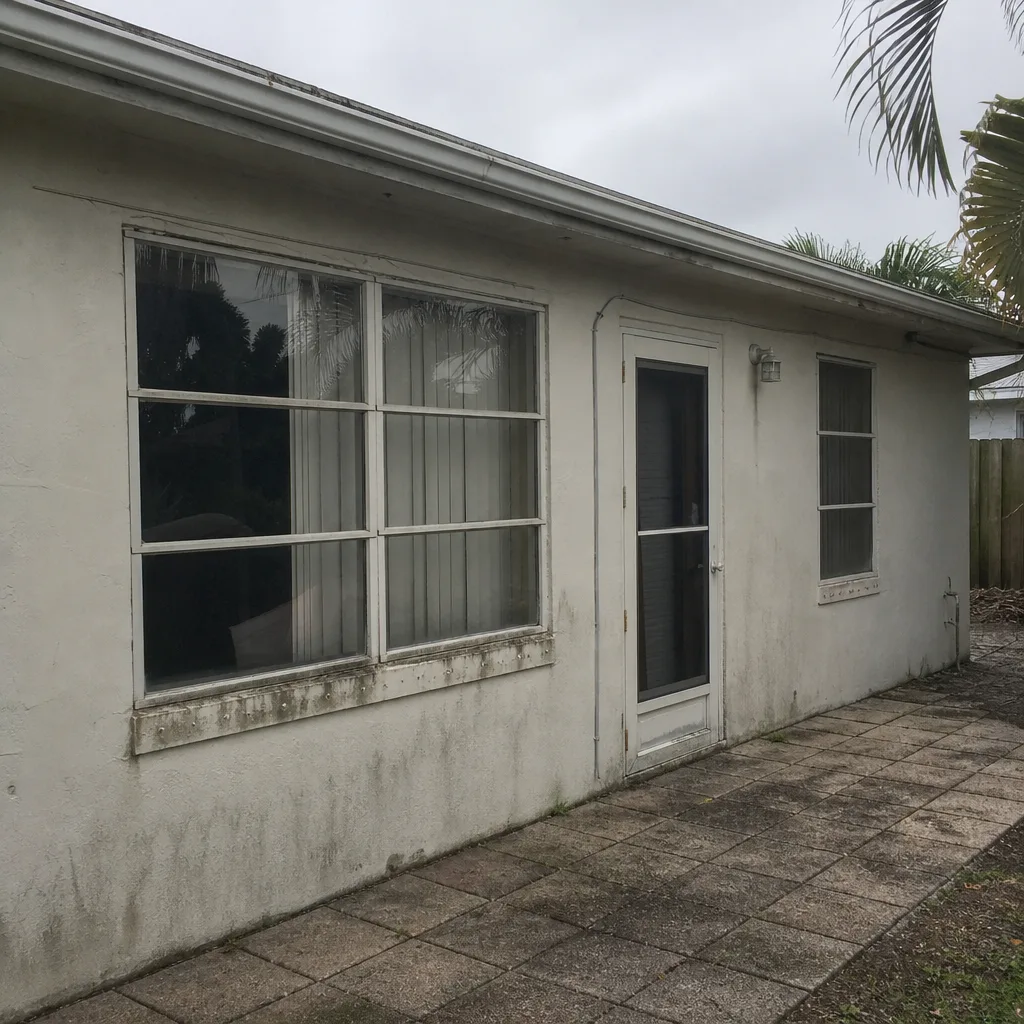 Before
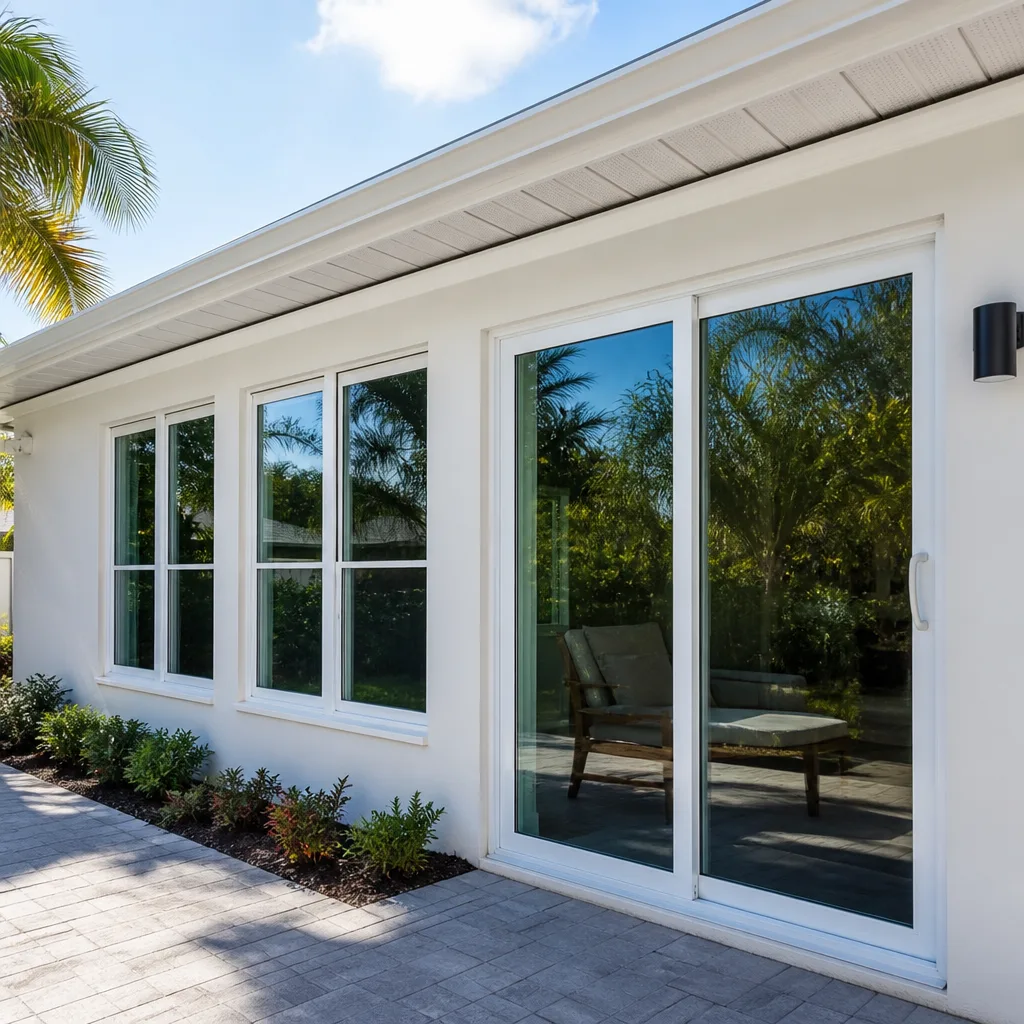 After
AfterTable of Contents
- Florida’s Owner-Builder Exemption: What It Actually Covers
- The Three Conditions Broward County Applies
- Where DIY Is Legal and Sensible: The Narrow Category
- Why Impact-Rated Work Requires a Licensed Contractor
- Insurance, Resale, and the Cost of Unpermitted Work
- Real Cost Comparison: DIY Materials vs. Licensed Installation
- How to Verify Permit History Before You Buy
- When to Call a Professional
Florida’s Owner-Builder Exemption: What It Actually Covers

Florida Statute 489.103(7) contains the owner-builder exemption that every Florida homeowner has heard about and most misunderstand. The statute says an owner of property may act as their own contractor and pull a permit for construction on their primary residence, provided the structure is single-family, detached, and the owner intends to occupy it for at least twelve months. That sounds broad. It isn’t.
The same statute contains an explicit carve-out: the exemption does not cover work that requires a licensed specialty contractor. In Broward County, the building code division interprets window and door installation as specialty contractor work when it involves structural modification, impact-rated products, or alteration of the building envelope. For Pompano Beach homeowners, this means the exemption you think you have likely doesn’t apply to the work you’re planning.
Here’s what the statute language means in practice. If you’re replacing a rotted interior door slab in a bedroom, using the existing hinges and frame, you’re probably within the exemption. If you’re cutting a new opening for a patio door in a cinder-block wall, you are not. If you’re swapping out a standard window for another standard window of identical dimensions, you might be in a gray area that depends on whether the product is impact-rated. If you’re installing a PGT or CGI impact window in a coastal exposure zone, you are definitively outside the exemption.
The statute also imposes liability conditions that few homeowners consider. Acting as your own contractor makes you responsible for compliance with all applicable building codes, worker compensation requirements, and subcontractor payments. You assume the same liability a licensed contractor would carry, without the insurance backing or the legal shield of a corporate entity. For window work that fails during a storm, that liability can extend to damage to neighboring properties and personal injury claims.
We’ve reviewed permit applications at the Broward County Building Code Division office near Fort Lauderdale, and the staff consistently applies a simple test: does the product carry a Miami-Dade County Notice of Acceptance or Florida Product Approval, and is it being installed in a High-Velocity Hurricane Zone? If both answers are yes, the permit requires a licensed contractor signature. Pompano Beach sits entirely within that zone.
The Three Conditions Broward County Applies
The Broward County Building Code Division evaluates owner-builder permit applications for window and door work against three specific conditions. Understanding these conditions before you visit the permit counter saves time and prevents the common scenario of a homeowner completing an application only to be told the exemption doesn’t apply.
Condition one: product classification. Is the window or door impact-rated, or does the installation location require an impact-rated product under the Florida Building Code? In Pompano Beach, any opening within one mile of the coastal mean high water line must use impact-rated products unless the home has engineered shutters or a certified secondary wind barrier system. Most neighborhoods east of Dixie Highway, including Harbor Village, Garden Isles, and the original Pompano Beach waterfront plat, fall within this zone. The product classification is determined by the Miami-Dade NOA or Florida Product Approval number printed on the product label, not by what the homeowner believes they bought.
Condition two: opening modification. Does the work alter the rough opening dimensions, the header structure, or the fastening pattern specified in the product approval? Even a “same-size” replacement can trigger this condition if the new product requires a different nailing pattern or if the existing opening has settled out of square and needs reframing. Broward County inspectors check header sizing against the Florida Building Code Tables R502.5(1) and (2) for single-family construction. A homeowner replacing a 72-inch sliding glass door with a newer, heavier unit may discover the existing header is undersized for the new span load. That discovery, made during inspection, requires an engineer’s letter and a revised permit, neither of which an owner-builder can easily produce.
Condition three: envelope continuity. Does the installation affect the water-resistive barrier, the flashing integration, or the air barrier continuity? The Florida Building Code requires that window and door installations maintain the drainage plane and prevent water intrusion at the sill, jamb, and head. Broward County’s inspectors are trained to look for proper sill pan flashing, back dam construction, and integration with the WRB. A homeowner who installs a window with canned spray foam and exterior caulk, skipping the pan flashing, will fail inspection and face a costly removal and reinstallation. The county’s interpretation holds that envelope continuity work requires the technical competency of a licensed contractor, and they deny owner-builder permits on this basis routinely.
We’ve seen homeowners from the Palm Aire and Collier Manor neighborhoods spend weeks preparing for DIY installations, only to learn at the permit counter that their product selection or opening condition triggers one of these three conditions. The time cost alone, measured in permit application delays and rescheduled material deliveries, often exceeds the labor cost difference they were trying to capture.
Where DIY Is Legal and Sensible: The Narrow Category

The category of window and door work where DIY is both legally permitted and practically advisable in Pompano Beach is narrow, but it exists. Here are the specific scopes we’ve identified through our work and permit research, with the skill and tool requirements for each, plus a Seasonal Windows & Doors Care for Pompano Beach: Year-Round Homeowner’s Guide for ongoing maintenance.
1. Weatherstripping Replacement
This is the most accessible DIY window and door maintenance task. Compression seals, pile weatherstrip, and bulb-type gaskets degrade in Florida’s UV exposure and salt air, typically within five to seven years. Replacement requires only a utility knife, measuring tape, and the correct replacement profile. The critical skill is identifying the manufacturer and series of your window or door, because weatherstrip dimensions are not universal. PGT, CGI, and other manufacturers sell replacement kits through their dealer networks. Cost runs $15 to $40 per opening in materials. No permit required.
2. Non-Impact Interior Door Hardware Replacement
Replacing knobs, levers, deadbolts, and hinges on interior doors that do not serve as rated fire assemblies or impact-rated storm barriers is straightforward owner work. The only complication arises with pre-hung interior doors in older Pompano Beach homes, where the original 1-3/8 inch slab thickness may not match modern 1-3/4 inch hardware bore standards. A door reinforcer plate and careful mortising solve this. Cost: $30 to $120 per door in hardware. No permit required.
3. Screen Frame Repair and Rescreening
Aluminum screen frames bend, spline channels clog with paint, and Florida’s afternoon thunderstorms drive debris that punctures mesh. Rescreening requires a spline roller, replacement screen material (fiberglass for visibility, aluminum for durability), and patience. The skill is maintaining uniform tension without distorting the frame. For Pompano Beach homes with pool enclosures or large patio screen walls, this is a genuine money-saver: professional rescreening runs $75 to $150 per panel, while DIY materials cost $15 to $30. No permit required.
4. Caulk and Sealant Renewal
Interior perimeter sealant around window and door frames, where it meets drywall or trim, is maintenance, not modification. Use a paintable latex caulk for interior gaps, silicone for wet areas. The skill is tool control: a smooth bead requires steady pressure and the correct angle cut on the nozzle. Cost: $5 to $10 per tube. No permit required.
What these four categories share is that none alter the structural frame, none involve impact-rated products, and none affect the building envelope’s water or air barrier. They are maintenance and repair, not installation. The moment your scope crosses into any of those three areas, the legal and practical calculus changes.
Why Impact-Rated Work Requires a Licensed Contractor
The requirement for licensed contractor involvement in impact-rated window and door installation isn’t bureaucratic excess. It’s a response to documented failure modes in hurricane conditions, and the Florida Building Code’s provisions for High-Velocity Hurricane Zones reflect hard lessons from Andrew, Wilma, Irma, and Ian.
Impact-rated products, whether from PGT, CGI, or other manufacturers holding Miami-Dade NOAs, are tested as complete systems. The rating applies to the glazing, the frame, the reinforcement, the fasteners, and the installation method together. Change one variable, the rating voids. A homeowner who installs a CGI Sentinel impact window with the wrong fastener type, or with fasteners spaced beyond the approved pattern, or without the specified structural sealant at the frame-to-wall interface, has a window that looks identical to a properly installed unit but performs as ordinary glass in a design wind event.
The fastening specification matters particularly in Pompano Beach’s construction environment. Homes built between 1950 and 1990, which includes much of the original Pompano Beach plat and the early Palm Aire developments, used concrete block construction with inconsistent aggregate and variable compressive strength. The approved fastener for a given impact window in new concrete may not achieve the required pull-out strength in older, softer block. A licensed contractor evaluates this with a hammer drill test or a pull tester and specifies an epoxy-set anchor or a longer tapcon as needed. A homeowner following a generic installation video misses this entirely.
The water management detail is equally critical. Impact windows in Florida’s driving rain conditions must shed water at the sill, not merely seal against it. The sill pan flashing, installed before the window, creates a dam and drainage path that directs any incidental water to the exterior. Without it, water pools at the rough sill, migrates through the block, and appears as interior drywall staining months later. We’ve opened walls in Pompano Beach homes where the window appeared properly caulked but had no pan flashing, and the framing behind was black with mold. The repair cost exceeded the original installation price by a factor of three.
Broward County’s inspection protocol for impact window and door installations includes three specific checks: fastener type and spacing against the product approval, continuity of the water-resistive barrier, and operational testing of the sash or panel. The inspector signs the permit card only when all three pass. An owner-builder who fails any check must correct and call for re-inspection, paying the re-inspection fee and living with an open permit until resolution. Licensed contractors build this contingency into their workflow; homeowners typically do not.
Insurance, Resale, and the Cost of Unpermitted Work
The consequences of unpermitted window and door work extend beyond code compliance into financial exposure that many Pompano Beach homeowners discover only when it’s too late to correct.
Homeowner’s insurance implications. Florida insurance carriers have tightened claims scrutiny significantly since 2022. When a wind or water damage claim involves windows or doors, the adjuster routinely requests permit history. Unpermitted impact window work gives the carrier a basis to deny the claim, arguing that the installation’s compliance with the Florida Building Code was never verified. We’ve reviewed claim denials where the carrier cited lack of permit specifically, and the homeowner’s recourse was limited to expensive litigation with uncertain outcome. The annual premium savings from a DIY installation evaporate against a single denied claim for water intrusion or storm damage.
Resale disclosure obligations. Florida’s seller disclosure form, required in most residential transactions, asks whether the seller knows of any work performed without required permits. Answering falsely exposes the seller to post-closing liability; answering truthfully triggers buyer scrutiny. In Pompano Beach’s competitive resale market, a home with unpermitted window work faces one of three outcomes: the buyer demands a price reduction equal to the estimated permit and reinstallation cost; the buyer’s lender declines to fund until permits are obtained; or the deal fails entirely and the listing becomes stigmatized.
The re-permitting cost. When unpermitted work is discovered, the path to compliance is not a simple retroactive permit. Broward County requires exposure of the work for inspection, which means removing interior trim, and potentially siding or drywall, to verify fastening and flashing. If the work fails inspection, complete removal and reinstallation may be required. We’ve provided estimates for this corrective work where the total cost, including the original DIY materials, exceeded what a licensed installation would have cost by 40 to 60 percent.
Neighbor liability. Florida’s comparative negligence statute means that if your unpermitted window fails in a storm and damages an adjacent property, your liability exposure increases because the installation lacked professional verification. Your homeowner’s policy may respond, or it may not, depending on the policy language regarding unpermitted work. The risk is unquantifiable until a claim is filed and denied.
Real Cost Comparison: DIY Materials vs. Licensed Installation
The cost argument for DIY window and door installation is intuitively appealing: eliminate labor markup, buy materials at wholesale, invest your own time. The reality is more complicated, and the savings narrower, than most homeowners calculate. Here’s a line-item comparison for a typical Pompano Beach scope: replacement of ten single-hung windows with impact-rated vinyl units in a 1970s concrete block home.
| Cost Component | DIY Path | Licensed Contractor Path |
|---|---|---|
| Windows (PGT WinGuard vinyl single-hung, standard sizes) | $4,500-$5,500 | $4,500-$5,500 |
| Fasteners, anchors, sealant, flashing | $400-$600 | Included in labor |
| Specialty tools (hammer drill, concrete bits, laser level, etc.) | $350-$700 (purchase or rental) | Included in labor |
| Permit and inspection fees | $350-$500 | $350-$500 |
| Labor (valued at your time or foregone wages) | 60-100 hours at your rate | $3,500-$5,000 |
| Waste disposal | $150-$250 | Included in labor |
| Callback/repair reserve (10-15% of material cost for typical DIY error rate) | $450-$825 | Covered by contractor warranty |
| Documented photo record and written warranty | None | Included (Haven Standard) |
| Total Comparable Cost | $6,200-$8,375 plus 60-100 hours | $8,350-$11,000 |
The gap narrows further when you account for the DIY error rate we’ve observed. In our experience reviewing homes where owners attempted their own impact window installations, roughly one in four openings has a detectable defect: improper fastener embedment, missing or reversed sill pan, damaged glazing bead, or operable sash misalignment. These defects don’t announce themselves immediately. They appear as water staining, operational binding, or, in the worst case, failure under load. The cost to correct a defect in an installed window is substantially higher than the cost to install it correctly the first time, because removal risks frame damage and always requires new sealant and often new fasteners.
The licensed contractor path also includes value that doesn’t appear in the line items. At Sightline Windows & Doors Pompano Beach home, our measured survey produces a document the customer keeps, and the written quote derived from it cannot differ. The installation leaves a documented photo record. The 365-Day Done Right Promise, written into the Haven Standard, means that if any detail is not done right, we make it right without additional charge. These aren’t marketing additions; they’re evidence that the installation was performed to a verifiable standard, which matters when you sell the home or file an insurance claim.
How to Verify Permit History Before You Buy

Pompano Beach’s housing stock includes homes that have changed hands multiple times since the 1960s, and window and door work performed by previous owners may or may not have been permitted. Before you close on a property, you can verify this history yourself using Broward County’s online tools. Here’s the exact process.
- Navigate to the Broward County Permits website. Search for “Broward County Permits Online” and select the official county portal. The system is separate from the City of Pompano Beach’s municipal permits, though some older records may exist only at the city level.
- Search by property address. Enter the full street address, including directional prefix if applicable (NE, SE, NW, SW). Pompano Beach’s street grid uses these prefixes extensively, and omitting them returns incorrect results. The system will display a permit history table with permit numbers, types, issue dates, and statuses.
- Filter for window and door permits. Look for permit types labeled “Window/Door,” “Aluminum,” or “Structural.” In older records, impact window replacements may appear under a general “Building” permit with a description field. Click each permit number to view the scope description and contractor information.
- Verify final inspection status. A permit without a final inspection is an open permit, which creates a cloud on title in some transactions. The status field should read “Final” or “CO Issued” (Certificate of Occupancy). If you see “Expired,” “Revoked,” or no final inspection, the work was not legally completed.
- Cross-check with the seller’s disclosure. Compare the permit history against what the seller disclosed. Unreported work that appears in the permit history may be innocent oversight; unreported work that doesn’t appear in the permit history is unpermitted work, and you should treat it as a material defect requiring further investigation.
- Request documentation from the seller. For permitted work, ask for the final inspection card, the contractor’s invoice, and any product warranty documents. For impact-rated windows, the Miami-Dade NOA or Florida Product Approval documentation should travel with the property. If the seller cannot produce these, the work’s compliance is unverified regardless of permit status.
We’ve performed this verification for prospective buyers in neighborhoods from Cypress Bend to the Hillsboro Shores area, and the findings have ranged from fully documented, properly permitted installations to complete absence of permits for visible window replacements. In one case, a home in the original Pompano Beach plat showed three separate window replacement scopes, none permitted, with the most recent performed using non-impact-rated products in a coastal exposure zone. The buyer used this information to negotiate a $14,000 price reduction, which approximated the cost of compliant replacement.
If you’re already in a home and suspect previous work was unpermitted, the same search applies. The knowledge affects your insurance coverage, your maintenance planning, and your disclosure obligations when you eventually sell.
Common Mistakes to Avoid
- Assuming the owner-builder exemption covers impact-rated work. Florida Statute 489.103 explicitly excludes work requiring a licensed specialty contractor, and Broward County applies this to all impact-rated window and door installations. The exemption you believe you have likely doesn’t exist for the work you’re planning.
- Buying impact windows from a non-authorized dealer. Manufacturer warranties for PGT, CGI, and other impact-rated lines require installation by a dealer or contractor authorized by the manufacturer. A homeowner who buys through a salvage outlet or online marketplace receives product with no warranty protection and no technical support for installation questions.
- Skipping the permit to save time. The permit process for a licensed contractor in Broward County typically takes two to five business days for a standard window replacement scope. The time “saved” by skipping the permit is dwarfed by the time consumed in a future sale negotiation, insurance dispute, or corrective permitting process.
- Using generic fasteners instead of the approved type. Every Miami-Dade NOA specifies fastener type, diameter, length, and embedment. A 3/16-inch tapcon and a 1/4-inch stainless steel wedge anchor perform differently in concrete block, and the inspector knows the difference. Using what you have on hand instead of what the approval requires is a predictable failure mode.
- Neglecting the sill pan flashing. This detail is invisible after installation and skipped in most DIY videos, yet it’s the single most important water management component. We’ve repaired water damage in Pompano Beach homes where the window was meticulously caulked but the sill pan was absent or reversed.
- Assuming all windows in a home require the same product. Exposure conditions vary by elevation and proximity to the coast. A window on the east-facing second story, twenty feet from the Intracoastal, has different wind load and water intrusion requirements than a west-facing first-story window shielded by a porch. A licensed contractor specifies by opening; a homeowner typically buys by the case.
When to Call a Professional
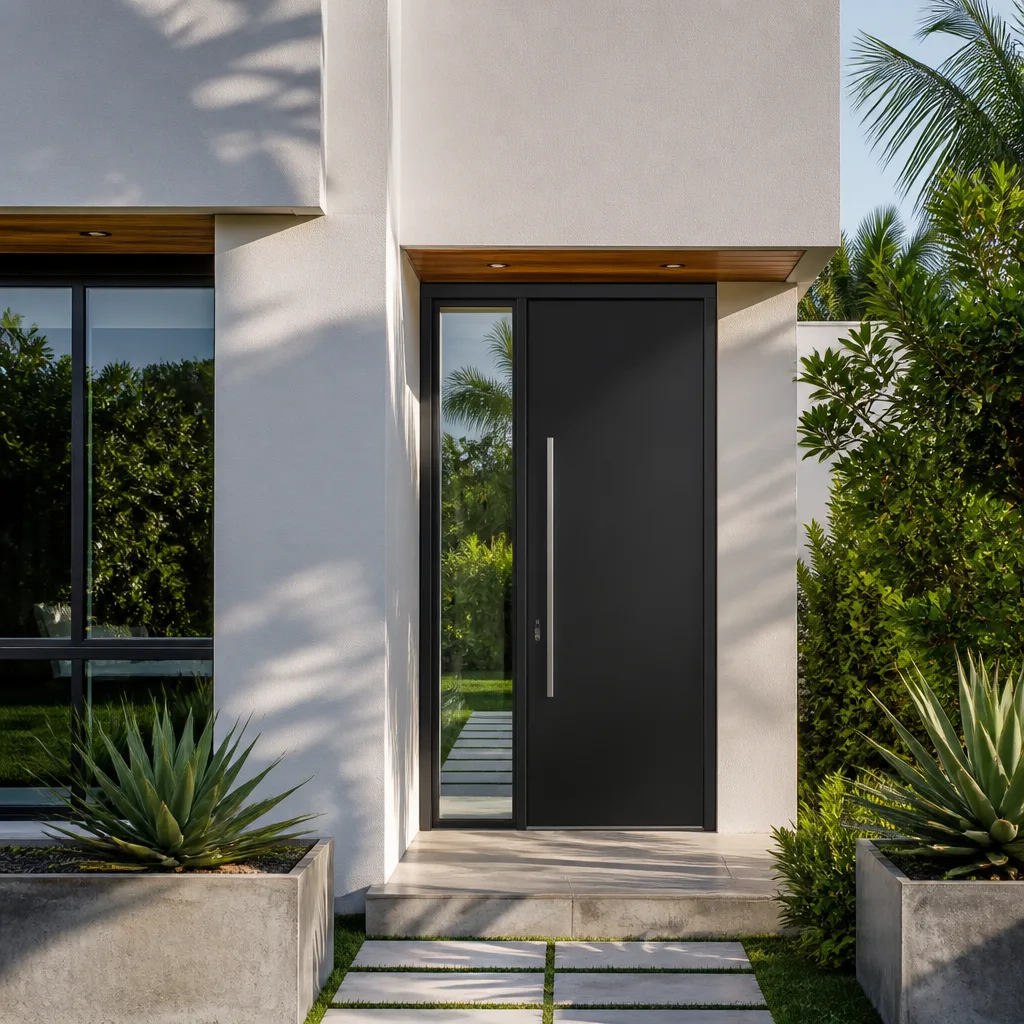
Call a licensed contractor when your scope involves impact-rated products, structural modification of openings, or any work affecting the building envelope. These are not skill thresholds; they are legal boundaries that protect your insurance coverage, your resale value, and your liability exposure.
Call when you need a written price before work starts, with no variance between quote and invoice. Call when you want the installation documented with photographs you can reference in a future sale or claim. Call when you want the person at your door to be background-checked, uniformed, and identified by license number before they enter your home.
Window Installation in Pompano Beach and Door Installation in Pompano Beach from Sightline Windows & Doors Pompano Beach begins with a measured survey you keep, produces a written quote that is the same document as the final invoice, and ends with a documented photo record and the 365-Day Done Right Promise written into the Haven Standard. We install PGT, CGI, Therma-Tru, and Mr-Glass products specified by what your opening requires, not by what we have in stock. Free estimates are available by calling (754) 253-0713.
Frequently Asked Questions
You can install non-impact windows that don’t modify the opening or affect the building envelope, but Broward County denies owner-builder permits for impact-rated window and door work because it requires a licensed specialty contractor under Florida Statute 489.103. For a free evaluation of whether your specific scope qualifies, call (754) 253-0713.
Licensed installation of ten standard impact-rated single-hung windows typically runs $8,350 to $11,000 including materials, permit, and labor, while a realistic DIY comparable costs $6,200 to $8,375 plus 60 to 100 hours of your time and no warranty protection. The gap closes further when typical DIY error rates and correction costs are included. Call (754) 253-0713 for a written estimate on your specific openings.
Yes, Florida insurers increasingly deny wind and water damage claims when impact window installations lack permits and final inspections, arguing that compliance with the Florida Building Code was never verified. The risk is particularly acute in Pompano Beach’s High-Velocity Hurricane Zone. Call (754) 253-0713 for a free second opinion on any written estimate, including documentation review.
Search the Broward County Permits Online database by property address, filtering for window, door, aluminum, or building permits, and verify that each permit shows a final inspection status. Compare the results against the seller’s disclosure statement, and request permit cards, contractor invoices, and product approval documentation for any work found. If you’re evaluating a property and need help interpreting the permit history, call (754) 253-0713.
The Haven Standard is the documented system that governs every installation Sightline has performed since 2012, with five clauses: Have it in writing (the measured survey and quote are the same document), Arrive on schedule, Verified crews (background-checked, uniformed, license-identified), Evidence on every job (documented photo record), and No surprises (the written price before work starts is the final price). The 365-Day Done Right Promise is embedded in this standard, not offered as a separate courtesy.
Yes, weatherstripping replacement, non-impact interior door hardware replacement, screen frame repair, and interior caulk renewal are all legally permissible DIY maintenance tasks that require no permit in Pompano Beach. These scopes don’t alter the structural frame, involve impact-rated products, or affect the building envelope. For anything beyond these narrow categories, call (754) 253-0713 to discuss whether professional installation is required.
The Bottom Line
The DIY versus professional question for Pompano Beach windows and doors is settled first by law, then by cost, and only last by skill. Florida’s owner-builder exemption doesn’t cover impact-rated installation in Broward County’s High-Velocity Hurricane Zone, which means the work that matters most for storm protection legally requires a licensed contractor. The narrow category of permissible DIY work, weatherstripping, hardware, screens, and sealant renewal, saves money but doesn’t address the structural and envelope concerns that determine a home’s resilience. When you weigh the actual material-plus-time cost of DIY against a licensed installation that includes permits, warranty, documentation, and liability protection, the savings shrink and may invert. For work that requires a professional, the relevant question isn’t whether to hire one, but which standard they work to. The Haven Standard, with its written price guarantee, verified crews, and documented evidence, exists so you can verify quality before you commit and prove it afterward.
Written by Sonia Raman, Owner at Sightline Windows & Doors Pompano Beach, serving Pompano Beach since 2012.
Six Reasons Homeowners Choose Sightline Windows & Doors Pompano Beach
Impact systems engineered to design pressures up to +/-100, matched to your wind zone - your openings hold when the storm arrives.
Low-E insulated impact glass from our manufacturer lines commonly cuts monthly cooling bills 20-30%.
Laminated impact glass shuts out up to 40% of outside noise - traffic, neighbors, weather.
Monitoring services run $30-90 a month. Laminated impact glass resists forced entry around the clock, with no subscription.
Florida homeowners average around 25% savings on the windstorm portion of their policy after protecting every opening - some homes qualify for more.
A full impact package upgrades curb appeal, buyer confidence and appraised value in one project.
Other Sightline Windows & Doors Pompano Beach Services