Last updated September 24, 2026
New windows and doors improve comfort, cut energy bills and add long-term value to your home. Sightline Windows & Doors Pompano Beach pairs proven product lines with our own installing crews for lasting performance - and a price we put in writing.
1. Choose your installer
The unit is half the job - the install is the other half. Our own background-checked crews measure, set, seal and insulate every opening, and they know the lines we quote inside and out because they install them every week.
2. Select the right products
Compare styles, materials and glass packages side by side until the fit is right for your rooms, your budget and your goals. The product-line comparison below is the place to start.
3. Prepare your home for install
Before install day we walk you through a short checklist - furniture pulled back, treatments down, a clear path to each opening - so install day is watch-it-happen, not scramble.
Compare the Lines We Quote
Every project is priced on the same lines, side by side - the price indicators below are relative, and your consultant shows exact numbers on your actual openings.
PGTThe line Florida homeowners arrive naming - the most Miami-Dade certifications in the industry$$$
- More Miami-Dade NOA certifications than any other line we quote
- WinGuard, EnergyVue and ClassicVue Max systems built for every wind zone
- 99% on-time delivery keeps your install date on the calendar
CGIThe heavyweight impact line$$$$$
- Large-missile impact ratings for the strictest wind zones
- Architectural-grade aluminum with commercial-depth frames
- The line we quote when protection is the whole point
CWSThe Florida value pick$$
- Vinyl systems built in Florida for Florida codes
- Strong energy packages at the friendliest price point
- The smart start for whole-home replacements on a budget
ESWSlim lines, big glass$$$$
- Narrow-sightline aluminum for modern elevations
- Oversized openings and floor-to-ceiling glass
- Impact-rated without the bunker look
ECOThe aluminum impact workhorse$$$
- Miami-built aluminum impact systems
- A strong price-to-protection ratio for coastal homes
- Proven inventory lines with short lead times
Windows & Doors Permits, Codes & Inspections in FL: What You Need to Know
A window installation in Pompano Beach can carry a final inspection sticker and still violate Florida Building Code. The product beneath that sticker might hold a Florida Product Approval for a 140 mph wind zone while your parcel sits in a 170 mph zone. The inspector checked installation method, not product suitability. Your insurer will check both after the storm. This guide - along with our Complete Guide to Windows & Doors in Pompano Beach - walks through the three overlapping compliance layers - state product approval, county wind load requirements, and municipal inspection scheduling - using the specific forms, code sections, and GIS tools that govern work in Broward County.
Quick Answer

Florida window and door installations require a permit when the work is not a “like-for-like replacement” under FBC 2023, when the product lacks a valid Florida Product Approval or Notice of Acceptance for your parcel’s wind speed zone, or when the opening changes in dimension, operation, or structural attachment. In Pompano Beach, the Building Division issues permits through the Sightline Windows & Doors Pompano Beach home portal, schedules inspections with 24-48 hour lead times, and issues a Certificate of Completion at final sign-off. Contractors must list the correct product approval number on the permit application before pulling it, and homeowners should verify that number against their parcel’s wind speed designation on the Broward County GIS map.
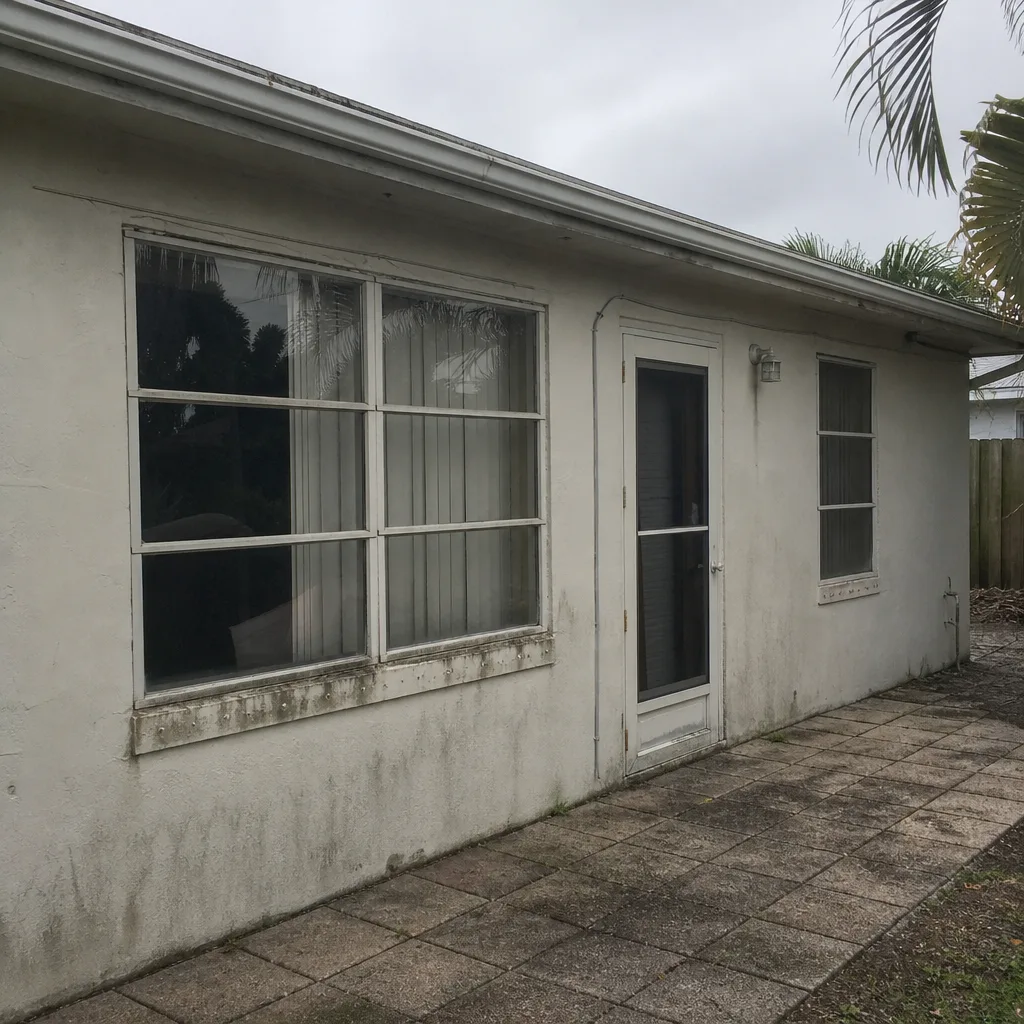 Before
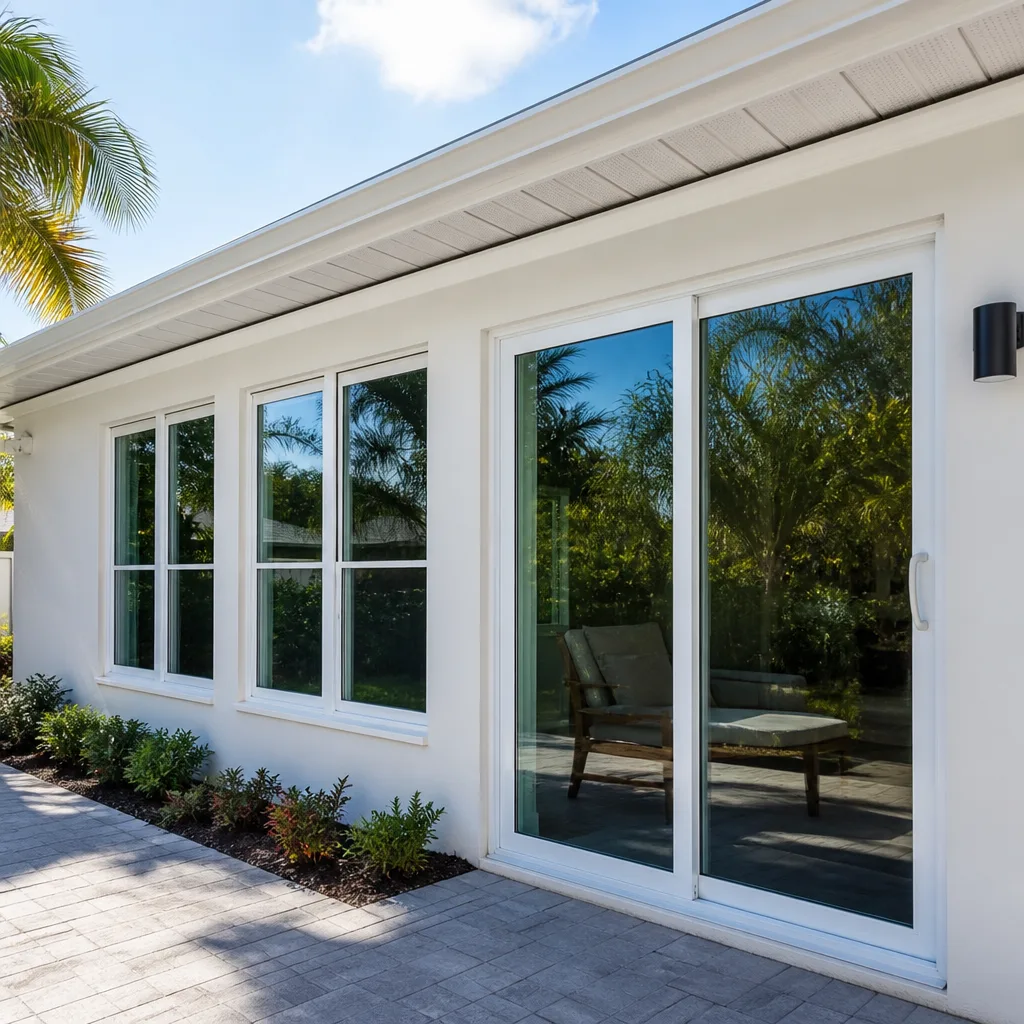 After
AfterTable of Contents
- The Three Compliance Layers: State, County, and Municipal
- Florida Product Approval vs. Notice of Acceptance
- How to Verify Your Parcel’s Wind Speed Zone
- What “Like-for-Like Replacement” Actually Means Under FBC 2023
- Reading a Permit Application Before It’s Pulled
- Pompano Beach Building Division: Inspections and Sign-Off
- The Insurance Risk No One Talks About
- Common Mistakes to Avoid
- When to Call a Professional
- Frequently Asked Questions
The Three Compliance Layers: State, County, and Municipal
Florida’s building code for windows and doors does not operate as a single checklist. It operates as three simultaneous filters, and a failure at any layer can void compliance even when the other two pass.
Layer one: State product approval. The Florida Building Commission maintains the Florida Product Approval System and the Miami-Dade County Notice of Acceptance (NOA) database. Every window or door installed in Florida must carry one of these two credentials, and the approval must cover the specific product configuration - size, glazing, frame material, and anchorage method - being installed. A PGT WinGuard window approved at 48″ x 60″ is not automatically approved at 72″ x 96″. The approval number, typically formatted as FLxxxxx or NOAxx-xxxx, must appear on the permit application.
Layer two: County wind load requirements. Broward County adopts the Florida Building Code with local amendments that establish wind speed zones by parcel. The 2023 Florida Building Code sets a baseline 175 mph ultimate design wind speed for Broward, but local amendments and site-specific conditions can adjust this. A product approved for 140 mph is not legal in a 170 mph zone, regardless of installation quality. This is where most compliance failures hide: the product is genuine, the installation is skilled, but the approval does not match the location.
Layer three: Municipal inspection scheduling. The Pompano Beach Building Division enforces the code through a phased inspection process: rough inspection (framing and anchorage), waterproofing inspection (flashing and sealant), and final inspection (operation, safety, and documentation). Each phase requires 24-hour advance scheduling through the city’s contractor portal. Miss a phase, and the permit expires after 180 days of inactivity.
We’ve completed over 18,000 openings since 2012, and the jobs that stall are rarely the complex ones. They’re the jobs where a contractor skipped the wind load verification or pulled a permit with a product approval number that did not match the specified unit. Haven Clause 1 - Have it in writing - exists because the permit application is where this error becomes permanent.
Florida Product Approval vs. Notice of Acceptance
Homeowners and even some contractors use these terms interchangeably. They are not interchangeable, and Broward County jurisdictions treat them differently at permit review.
Florida Product Approval (FL number). Issued by the Florida Building Commission under Section 553.842, Florida Statutes. Valid statewide. The approval includes a product control number (FLxxxxx), rated wind speed, size limitations, and approved anchorage details. For permit submission in Pompano Beach, the FL number must be current - approvals expire if not renewed - and must match the product label exactly.
Notice of Acceptance (NOA number). Issued by Miami-Dade County under its own product control program. Historically more stringent than state approval, and accepted by many Broward jurisdictions as an alternative. However, not all Broward municipalities automatically accept NOAs for products without a corresponding FL number. Pompano Beach accepts both, but the permit reviewer will flag an NOA that does not explicitly list compliance with the current Florida Building Code edition.
The practical difference: if you’re installing Window Installation in Pompano Beach with a CGI Estate Collection product, you need either the FL number from the Florida Product Approval System or the NOA number with FBC 2023 compliance notation. We specify products from CGI, CWS, and ES Windows by performance tier and price range, and we verify the approval status before the measured survey - not after.
Key verification steps:
- Obtain the product approval number from your contractor in writing before permit application.
- Search the Florida Product Approval System at floridabuilding.org/pr/pr_app_srch.aspx or the Miami-Dade NOA database at miamidade.gov/building.
- Confirm the approval status is “Active” and the expiration date extends beyond your project completion.
- Verify the approved sizes include your specified dimensions.
- Check that the rated wind speed meets or exceeds your parcel’s requirement.
How to Verify Your Parcel’s Wind Speed Zone

This is the step most guides & resources skip, and it is the step that determines whether your installation is legal.
Broward County maintains a GIS parcel map that overlays wind speed designations by address. The tool is not marketed to homeowners, but it is publicly accessible and requires no account.
Step-by-step verification:
- Navigate to the Broward County Property Appraiser GIS map at gis.bcpa.net.
- Enter your property address or parcel ID.
- Open the “Layers” menu and enable “Wind Speed Zones” under the Building Code overlay.
- Record the ultimate design wind speed (typically 170 mph or 175 mph for Pompano Beach addresses).
- Compare this speed to the product approval’s rated wind speed. The product rating must equal or exceed the parcel requirement.
We perform this verification during every measured survey in Pompano Beach neighborhoods from Garden Isles to Cypress Bend. In 2023, we identified three properties where the previous contractor had installed products rated for 140 mph in 170 mph zones. The installations passed visual inspection. They would not pass a post-storm engineering review, and the homeowners’ insurers would have had grounds to deny claims.
The GIS map also reveals flood zone designation, which affects sill height requirements for ground-floor openings. A window installed below the base flood elevation without proper flood venting can trigger a separate code violation even when the wind load compliance is correct.
What “Like-for-Like Replacement” Actually Means Under FBC 2023
Florida Building Code 2023, Section 105.1, exempts certain repairs from permit requirements. The exemption is narrow, and three specific conditions remove a job from this category and trigger full permit and inspection requirements.
The exemption applies only when:
- The existing window or door is removed and replaced with a unit of the same dimensions, same operation (hung, sliding, casement), same structural attachment method, and same or lower structural loading.
- No structural framing is modified.
- The replacement does not alter the egress, light, or ventilation requirements of the occupied space.
Three conditions that remove the exemption and require full permit:
- Change in operation or dimension. Converting a single hung window to a horizontal roller, or enlarging the rough opening, triggers full permit and inspection. Even a half-inch width increase requires engineering review if it affects the header or jack studs.
- Change in structural loading. Installing an impact-rated unit where a non-impact unit existed changes the anchorage requirements, frame depth, and wall loading. This is not like-for-like under FBC 2023, regardless of identical dimensions.
- Location in a flood zone. Properties in AE or VE flood zones (common in eastern Pompano Beach near the Intracoastal) require flood opening compliance that standard replacements may not satisfy. The replacement must maintain or improve the structure’s flood venting capacity.
We’ve reviewed competitor estimates where the contractor classified an impact conversion as “repair, no permit needed.” That classification is incorrect, and the homeowner bears the compliance risk. Our measured survey documents the existing unit’s specifications, the proposed replacement’s approval numbers, and whether the job triggers permit requirements. The customer keeps that survey.
Reading a Permit Application Before It’s Pulled
The permit application is a legal document that binds the contractor to specific products and methods. Once pulled, it creates a public record that is difficult to amend without delay. Homeowners should review three fields before the contractor submits.
Field 1: Product approval number. Listed under “Materials” or “Product Specifications.” Verify this number against the Florida Product Approval System or NOA database. Confirm it matches the exact product being installed, not a related product in the same line. A CWS 3000 Series approval does not cover a CWS 5000 Series unit.
Field 2: Design pressure rating. Expressed in pounds per square foot (psf) or as a DP rating. This must meet or exceed the structural calculations for your parcel’s wind speed and exposure category. Pompano Beach properties near the coast (east of Federal Highway) typically require higher DP ratings than inland properties due to exposure category D.
Field 3: Contractor license number. Florida requires a Certified Building Contractor (CBC) or Registered Specialty Contractor license for window and door installation. The license number on the permit must match the license of the contractor performing the work. We list our license numbers on every proposal under Haven Clause 3 - Verified Crews - and our technicians arrive uniformed with identification that matches the permit.
If any field is blank, contains “TBD,” or lists a product approval you cannot verify, do not allow the permit to be pulled. The permit becomes the official record of what was approved, and deviations during installation require formal amendment or risk failed inspection.
Our written scope includes the product approval number, DP rating, and license number before any permit application. The measurement and the quote are the same document. This is not a courtesy; it is the founding principle of how we operate.
Pompano Beach Building Division: Inspections and Sign-Off
The Pompano Beach Building Division processes permits through the Accela Civic Platform, with inspection scheduling available to licensed contractors through the online portal or by phone at (754) 253-0713. Homeowners cannot schedule inspections directly; the contractor of record must initiate each phase.
Inspection phases for window and door replacement:
- Rough inspection: Verifies framing, anchorage, and structural attachment before interior trim and exterior cladding conceal the work. Required for all permitted installations except like-for-like replacements of non-impact units in non-flood zones.
- Waterproofing inspection: Verifies flashing integration with the weather-resistant barrier, sealant continuity, and sill pan installation. Critical in Pompano Beach’s salt-air climate, where premature sealant failure is the most common callback we see on non-Sightline installations.
- Final inspection: Verifies operation, egress compliance, safety glazing location, and documentation. The inspector reviews the product label against the permit approval number and checks that installed units match the approved sizes.
Current lead times and scheduling:
As of early 2024, Pompano Beach Building Division schedules inspections with 24-48 hours notice for standard requests. Same-day inspections are not available. Inspections occur Monday through Friday, 8:00 AM to 3:30 PM, with no Saturday or emergency inspection service. Failed inspections require re-inspection fees and corrected work before rescheduling.
At final sign-off, the homeowner receives a Certificate of Completion, which should be filed with your insurance provider and retained for property sale documentation. We provide a copy of this certificate, along with our documented photo record, as part of every completed job. The photo record shows the opening before work, during rough-in, and at completion, with timestamps and GPS coordinates.
Properties in Pompano Beach’s older neighborhoods - Old Pompano, Kester Park, and the original Garden Isles plats - often present framing conditions that differ from modern construction. We’ve encountered balloon framing, no headers, and original 1950s jalousie openings that require engineered solutions. These conditions extend the inspection timeline and must be disclosed on the permit application to avoid failed rough inspection.
The Insurance Risk No One Talks About
An installation that passes final inspection but uses an under-rated product creates a documented liability that insurers can exploit.
Florida insurers increasingly employ post-storm engineering investigations to deny claims. The investigation reviews permit records, product approvals, and installation photographs against the actual damage. If the installed product’s approval does not cover the parcel’s wind speed zone, the insurer may classify the opening as “non-compliant construction” and deny the claim regardless of whether the product physically failed.
The inspection sticker on your window does not cure this defect. The inspector verified installation method, not product suitability for your specific parcel. The permit application, not the inspection, establishes the legal baseline for what was approved - and if that application lists an incorrect approval number, the compliance chain breaks.
We’ve provided expert documentation for three insurance disputes in Broward County where the prior contractor’s permit application contained incorrect product approval numbers. In two cases, the homeowner had no recourse because the contractor was unlicensed or had dissolved. Haven Clause 5 - No surprises - means we verify every approval number before the permit is pulled, document that verification in writing, and maintain the record for the warranty period.
The Window Replacement in Pompano Beach market includes operators who pull permits with generic product numbers and substitute unspecified units during installation. This practice passes visual inspection but creates the exact insurance exposure this section describes. Our written scope prevents substitution: the product specified is the product approved, and the photo record proves what was installed.
Common Mistakes to Avoid
- Accepting “permit included” without seeing the application. The phrase means nothing if the application lists incorrect product approvals. Request the application draft and verify the FL or NOA number yourself.
- Assuming impact-rated replacement is like-for-like. Converting to impact-rated units from non-impact always requires full permit and engineering review. Any contractor who claims otherwise is misinformed or misrepresenting.
- Ignoring flood zone status. Pompano Beach properties east of Dixie Highway and near the Intracoastal Waterway frequently sit in AE zones. Replacement windows must maintain flood venting capacity, or the job requires additional engineering.
- Verifying only the manufacturer, not the specific product. ES Windows manufactures units with varying wind speed ratings across its product lines. The approval number identifies the specific unit, not the brand.
- Scheduling work before permit approval. Starting installation on a pending permit risks stop-work orders and double inspection fees. Pompano Beach Building Division issues permits within 5-10 business days for standard applications; legitimate contractors do not need to start early.
- Discarding the Certificate of Completion. This document is required for insurance policy updates, property sales, and dispute resolution. Store it with your deed and survey.
When to Call a Professional
Call a licensed contractor when the job involves impact-rated conversion, any change in opening dimension or operation, properties in flood zones, or when you cannot verify the product approval number against your parcel’s wind speed designation. These are not DIY vs Professional determinations; they require structural calculation and code interpretation.
We also recommend professional review when replacing windows in pre-1980 construction, where asbestos-containing materials or lead-based paint may be present, or in condominium units where the association’s master policy and the unit owner’s policy create coverage gaps for envelope work.
Door Installation in Pompano Beach and window replacement projects benefit from a measured survey that documents existing conditions before any permit application. Sightline Windows & Doors Pompano Beach offers free estimates in Pompano Beach - call (754) 253-0713. We bring the measured survey, the written price, and the verified product approvals to every consultation. No tool is lifted before the customer has the complete scope in hand.
Frequently Asked Questions
You need a permit unless the replacement is a true “like-for-like” repair under FBC 2023 - same dimensions, same operation, same structural loading, no framing modification, and no flood zone complications. Converting to impact-rated units, changing from single hung to sliding operation, or enlarging the opening all require full permit and inspection. Call (754) 253-0713 for a free estimate - we’ll assess your specific situation and document whether permitting applies.
Pompano Beach Building Division calculates permit fees based on project valuation, with a minimum fee for residential window and door replacements typically ranging from $150 to $400 depending on the number of openings and required inspections. The fee schedule is published in the city’s municipal code; we itemize the permit cost separately in our written quotes so the homeowner sees exactly what the city charges versus what the contractor charges. Call (754) 253-0713 for an exact quote on your project - estimates are free.
A Florida Product Approval (FL number) is issued by the state and valid statewide; a Notice of Acceptance (NOA number) is issued by Miami-Dade County and accepted by many, but not all, Broward jurisdictions. Pompano Beach accepts both, but NOAs must explicitly reference compliance with the current Florida Building Code edition. Always verify which credential your specific product carries before permit application.
Use the Broward County Property Appraiser GIS map at gis.bcpa.net, enable the “Wind Speed Zones” layer, and compare your parcel’s ultimate design wind speed to your product’s rated wind speed. The product rating must equal or exceed the parcel requirement. We perform this verification during every measured survey and provide the documentation to the homeowner.
Probably not. Florida insurers increasingly deny claims based on non-compliant construction, and the inspection stamp does not cure a product approval mismatch. The permit application establishes the legal baseline; if it lists an under-rated product, the installation is non-compliant regardless of visual inspection results. This is why we verify every approval number before pulling permits and document that verification in writing.
Permit review typically takes 5-10 business days for standard residential window and door applications. Inspection scheduling requires 24-48 hours advance notice, with inspections conducted Monday through Friday. The full process from application to final sign-off usually spans 2-4 weeks depending on inspection scheduling and any required corrections. We coordinate all scheduling and include timeline estimates in our written scope.
You should receive the Certificate of Completion from the Pompano Beach Building Division, a final invoice matching your written quote, product warranty documents from the manufacturer, and a photo record of the installation. At Sightline, we provide all four as standard, with the photo record timestamped and GPS-verified. These documents belong in your permanent property file.
The Bottom Line
Florida window and door compliance is a three-layer system: state product approval, county wind load verification, and municipal inspection. A failure at any layer - an expired FL number, a 140 mph product in a 170 mph zone, a missed waterproofing inspection - can void compliance and expose the homeowner to insurance denial. The permit application is the critical control point; review it before it’s pulled, verify every number, and demand written documentation at completion. In Pompano Beach’s coastal climate, the cost of getting this wrong is not a failed inspection. It’s an uninsured opening when the storm arrives.
Written by Sonia Raman, Owner at Sightline Windows & Doors Pompano Beach, serving Pompano Beach since 2012.
Six Reasons Homeowners Choose Sightline Windows & Doors Pompano Beach
Impact systems engineered to design pressures up to +/-100, matched to your wind zone - your openings hold when the storm arrives.
Low-E insulated impact glass from our manufacturer lines commonly cuts monthly cooling bills 20-30%.
Laminated impact glass shuts out up to 40% of outside noise - traffic, neighbors, weather.
Monitoring services run $30-90 a month. Laminated impact glass resists forced entry around the clock, with no subscription.
Florida homeowners average around 25% savings on the windstorm portion of their policy after protecting every opening - some homes qualify for more.
A full impact package upgrades curb appeal, buyer confidence and appraised value in one project.
Other Sightline Windows & Doors Pompano Beach Services